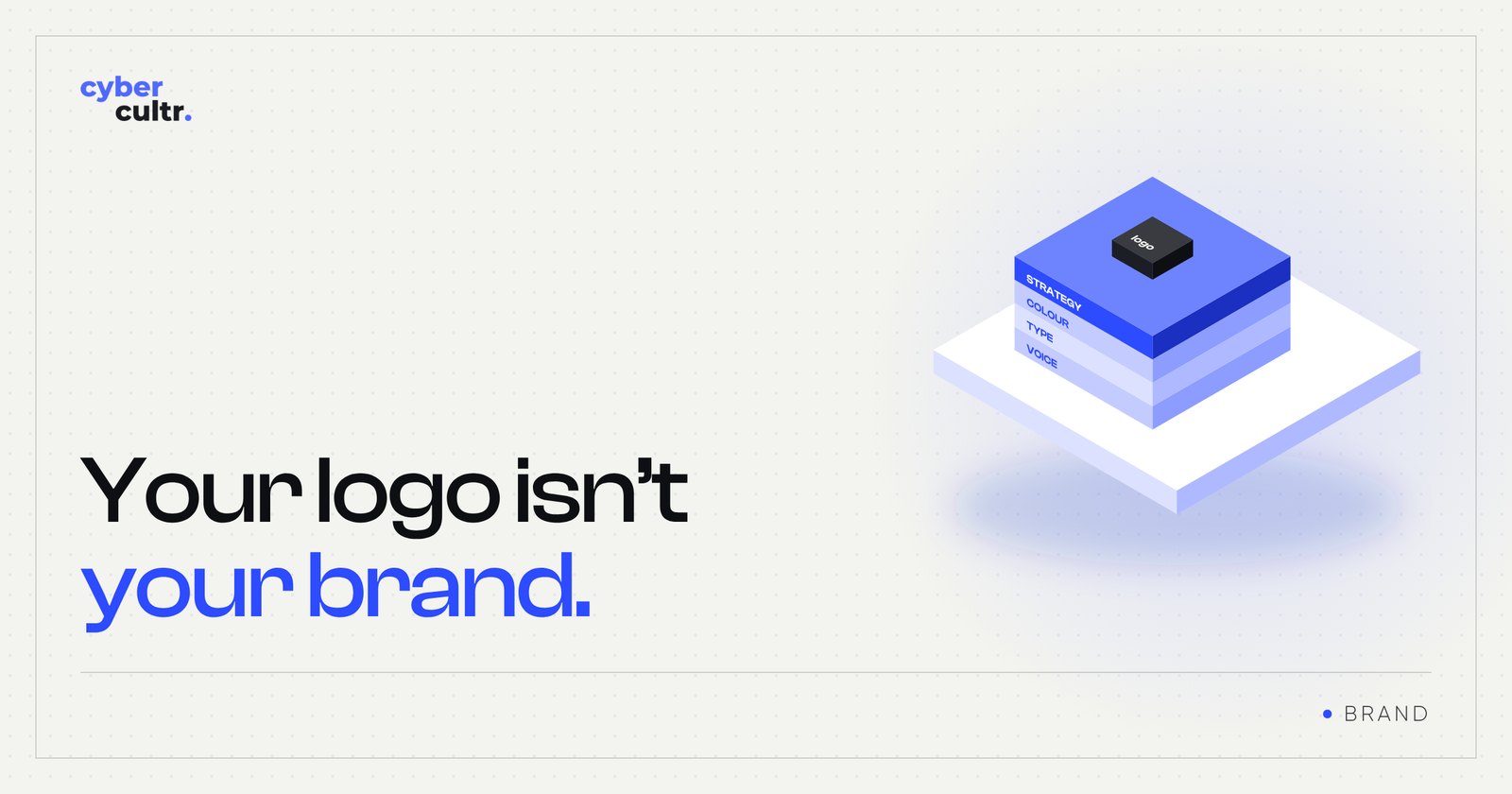
When a business owner tells us they need "branding", they often mean a logo. Sometimes a logo and a business card. And when they say their branding isn’t working, they often mean they’ve grown tired of the logo.
It’s an understandable mix-up. The logo is the most visible part of a brand, so it’s easy to think it is the brand. But a logo is to a brand what a name tag is to a person. It tells you who someone is. It doesn’t tell you whether you trust them, like them or want to do business with them.
This article explains the difference between a logo, a brand identity and a brand, and why it matters for how you invest. It’s the hub for our branding articles. We’ve designed more than 60 brands, and this distinction comes up in almost every first conversation.
Three things people call "branding"
1. The logo
A logo is a symbol, wordmark or combination of both that identifies your business. It’s important. A good logo is distinctive, memorable, works at every size and suits your business. But it’s one element of a much bigger system.
2. The brand identity
Brand identity is the complete visual and verbal system that expresses your brand. It includes:
- Logo and its variations (horizontal, stacked, icon, monochrome).
- Colour palette with primary and secondary colours and how to use them.
- Typography: the fonts for headlines, body text and digital use.
- Graphic elements: patterns, shapes, icons, illustration styles.
- Photography and imagery style.
- Tone of voice: how you write and speak.
- Applications: how it all comes together on signage, packaging, social media, uniforms, vehicles, stationery and digital.
- Brand guidelines that keep everything consistent.
3. The brand
Your brand is what people think, feel and expect when they encounter your business. It lives in your customers’ heads, not in your design files. It’s shaped by everything: your product, your service, your prices, your staff, your reviews, your advertising, how you answer the phone, how you handle complaints.
A famous line, often attributed to Amazon’s founder, puts it simply: your brand is what people say about you when you’re not in the room.
Why the difference matters
If you think your logo is your brand, you’ll try to fix brand problems with design. That rarely works.
- If customers think you’re expensive and not worth it, a new logo won’t change that. Better value communication, proof and service will.
- If customers don’t remember you, a new logo alone won’t help. Consistent, distinctive identity used everywhere, for a long time, will.
- If customers don’t trust you, a slicker logo might help a little. Reviews, credentials, case studies and good experiences will help far more.
We wrote about this in a rebrand won’t fix a broken offer. Design amplifies what’s already there. It can make a good business look as good as it is. It can’t make a weak offer strong.
What good brand identity actually does
That doesn’t mean design doesn’t matter. A strong brand identity does real commercial work:
- Recognition: customers spot you instantly across channels.
- Differentiation: you stand apart from competitors who all look the same.
- Perceived value: professional, considered design signals quality. We explore this in why premium brands look different.
- Trust: consistency suggests reliability. Inconsistency suggests chaos.
- Efficiency: clear guidelines make every piece of marketing faster and cheaper to produce.
- Marketing performance: a recognisable brand makes ads more effective, because people remember who they’re from.
Start with strategy, not design
Good branding starts long before anyone opens design software. Before designing, we work through questions like:
- Who are your customers, and what do they care about?
- What do you stand for? Your purpose and values.
- How are you different from competitors, in a way customers value?
- What’s your personality? Bold or calm? Playful or serious? Luxurious or accessible?
- Where are you going? Your brand should fit the business you’re becoming, not just the one you are today.
- What does the market look like? If every competitor uses blue and clean sans-serif type, maybe you shouldn’t.
The answers become a brand strategy, and the strategy guides every design decision. Without it, design is just personal taste.
What a complete branding project includes
When businesses ask what professional branding actually includes, here’s a typical scope:
- 1Discovery: research into the business, customers, competitors and market.
- 2Brand strategy: positioning, audience, values, personality and messaging.
- 3Naming (if needed).
- 4Visual identity: logo, colours, typography, graphic language and imagery direction.
- 5Verbal identity: tone of voice, key messages and taglines.
- 6Applications: stationery, social templates, signage, packaging, presentations and more.
- 7Brand guidelines: a clear manual so anyone can apply the brand correctly.
Not every business needs every step. A small startup may need a focused version. A growing company entering new markets may need all of it.
Signs your problem is the brand, not the logo
- Customers can’t explain what makes you different.
- Your marketing looks different on every channel.
- You’re competing mainly on price.
- Your team describes the business in different ways.
- You’ve outgrown your original positioning.
If several of these sound familiar, read 10 signs your business has outgrown its brand identity.
Branding in the UAE
The UAE is a crowded, fast-moving, highly visual market. A few considerations come up repeatedly in our work here:
- Bilingual identity. Your brand often needs to work equally well in Arabic and English. That means choosing typefaces with strong Arabic counterparts and designing logos that work in both scripts.
- Cultural sensitivity. Colours, symbols and imagery carry meanings. Getting them wrong can undermine trust.
- Premium expectations. In many categories, customers expect a polished presentation. A home-made look can cost you credibility.
- Diverse audiences. Your brand may need to appeal to Emiratis, long-term residents and visitors from dozens of countries.
How to protect your brand once it exists
A brand identity only works if it’s used consistently.
- Create and share brand guidelines with everyone who produces content.
- Use templates for social media, presentations and documents.
- Appoint a brand guardian who checks new materials.
- Review regularly. Brands should evolve, but deliberately, not by accident.
FAQs
What’s the difference between branding and logo design?
Logo design creates one symbol. Branding creates the strategy and complete identity system around it, including colours, typography, voice and guidelines, and shapes how people perceive the business.
Do small businesses need full branding?
They need the right-sized version. Even a small business benefits from a clear position, a consistent visual identity and simple guidelines. It doesn’t have to be a huge project.
How long does a branding project take?
It depends on the scope. A focused identity can take a few weeks; a full strategy and identity system for a larger organisation takes longer.
Can I just redesign my logo?
You can, and sometimes a logo refresh is all you need. But if the underlying issue is positioning or perception, a logo change alone won’t solve it.
Build a brand, not just a logo
We’ve designed more than 60 brands for businesses across the UAE and beyond, from startups to established companies. If you’d like to talk about your brand, see our brand identity design services or book a free call to see if we’re a good fit.